THE STORY
A VERNACULAR APPROACH
Mountain House
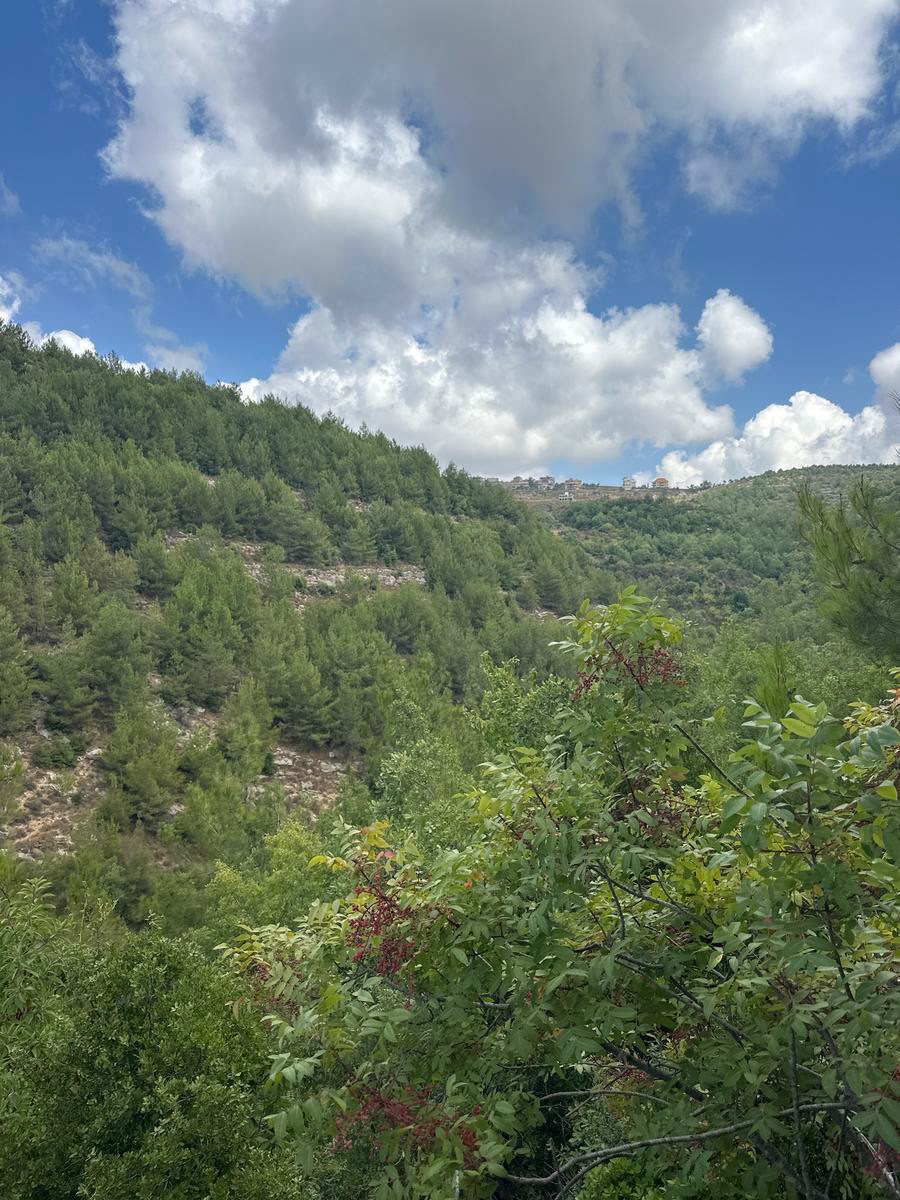
Lebanese Mountains · 1,000 m
Architecture is not placed upon the landscape. It emerges from it.
Lebanese Mountains · 1,000 m
Architecture is not placed upon the landscape. It emerges from it.
Located in the Lebanese mountains at an altitude of approximately 1,000 meters, this study explores three approaches to the design of small houses in the Lebanese mountains, developed in response to the specific topography, landscape and character of the region.
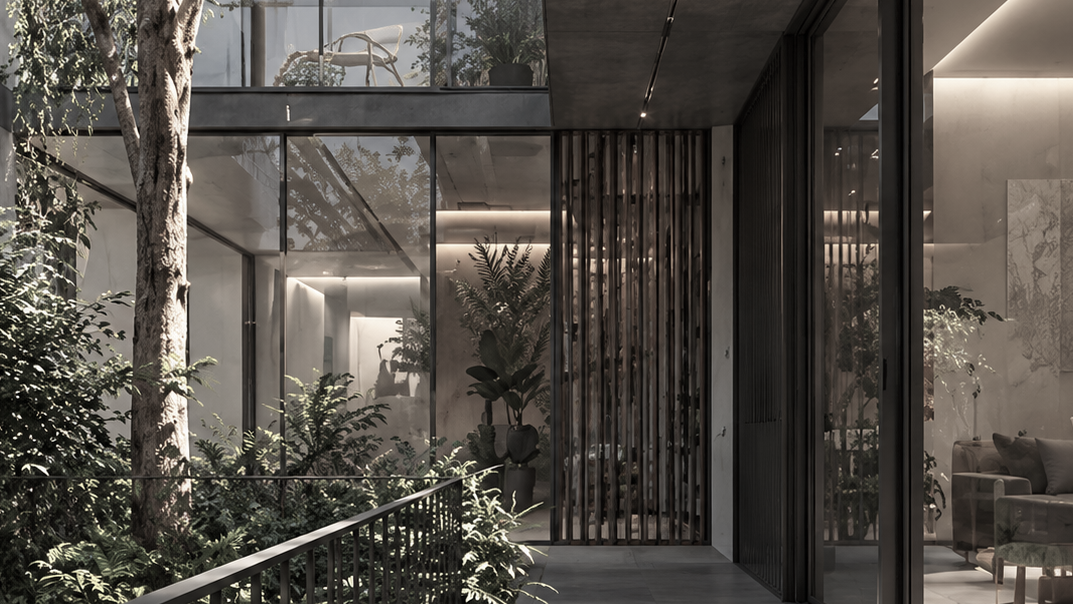
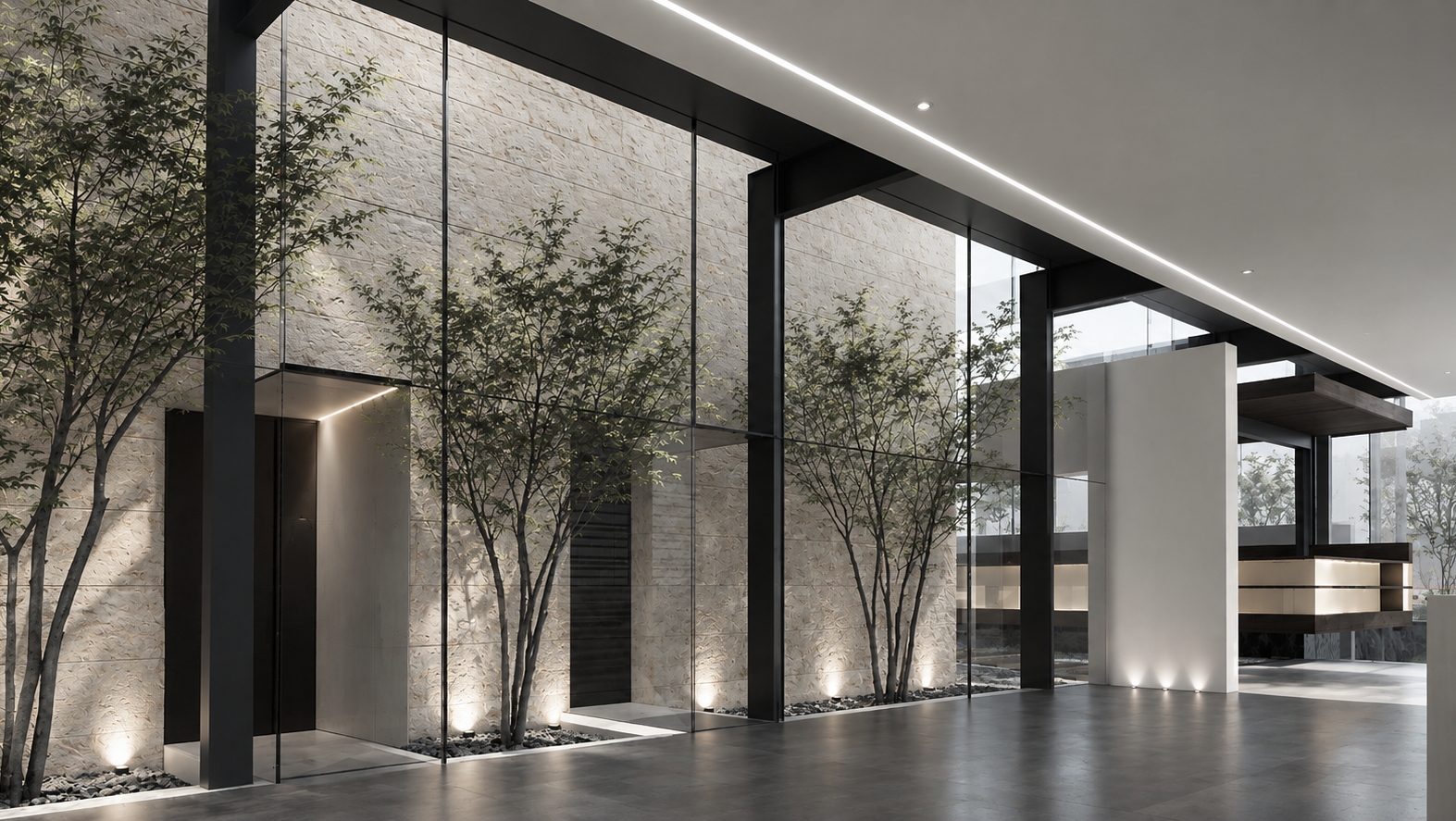
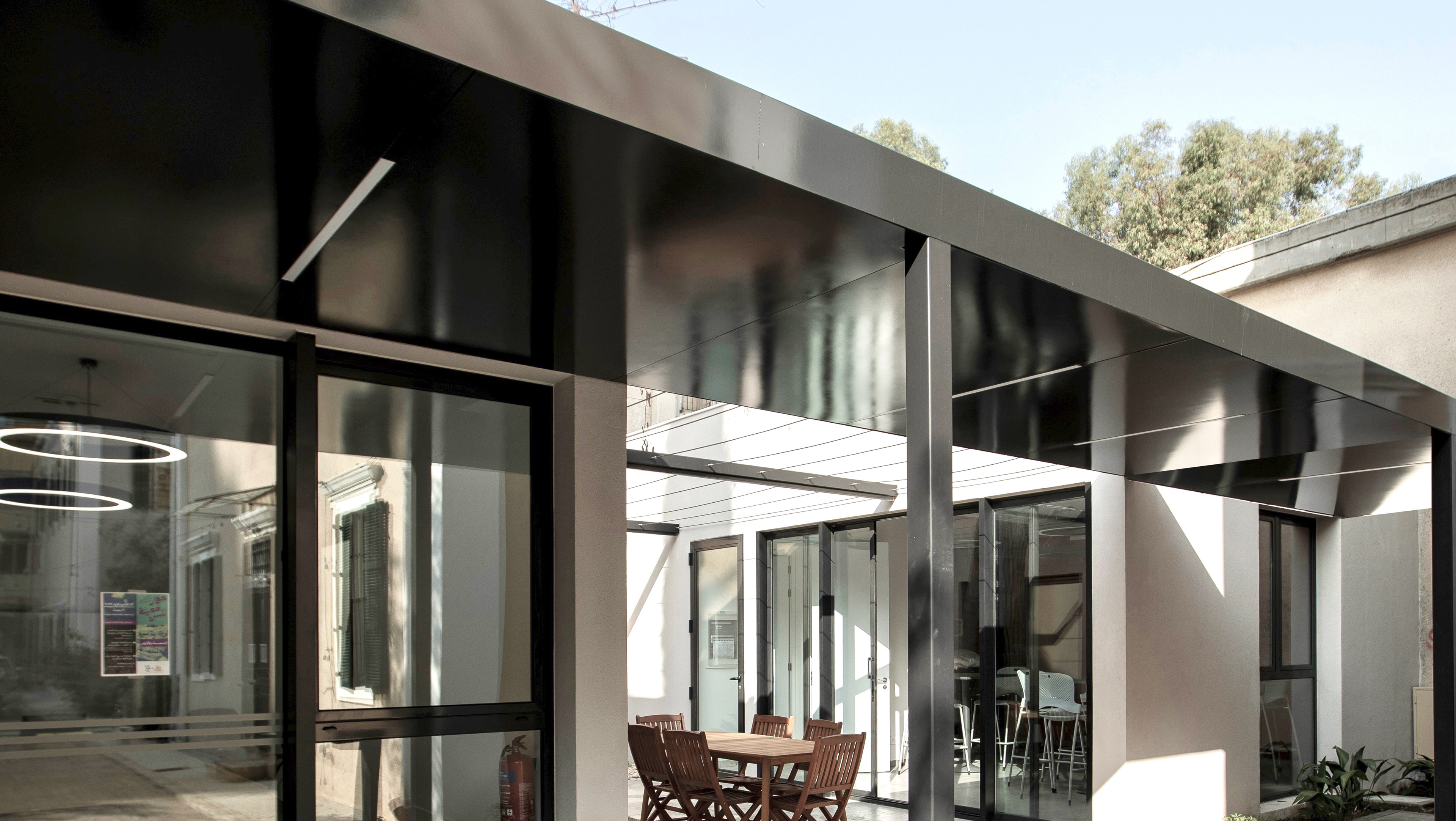
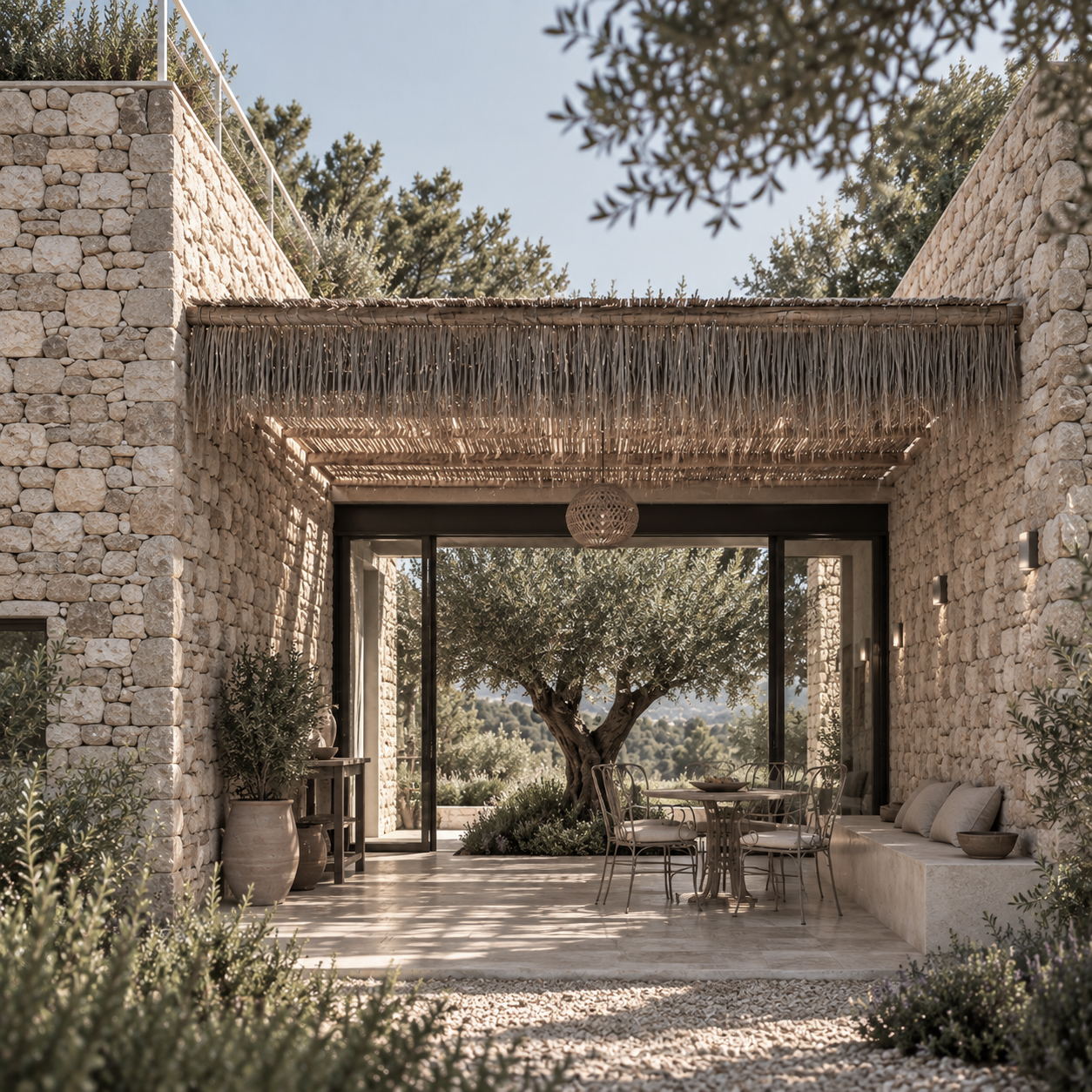
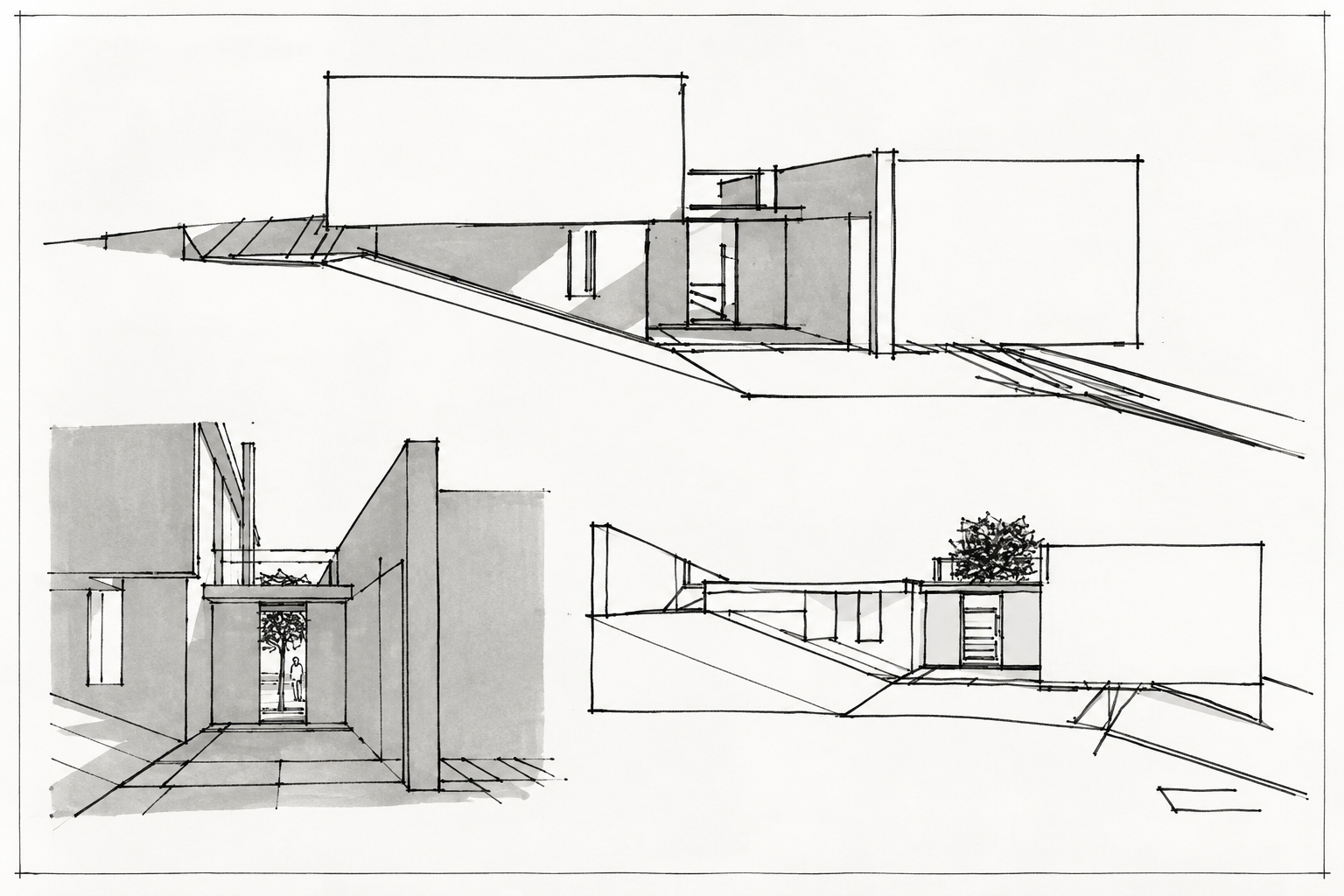
Although each house responds differently to its site and to the individual requirements of its client, the three share a common architectural concept: a clear separation of the day and night functions into distinct volumes, connected by a central glazed entrance and an inner patio. This transparent threshold becomes the trait d'union of the house; a continuous spatial link through which the different functions unfold and remain connected to nature.
The architecture is conceived as an eco-friendly and sustainable extension of the landscape. Rather than imposing a building upon the mountain, the approach is to work with the terrain, preserve its natural character and allow vegetation, local materials, water and climate to become integral components of the design.
Across the three proposals, sustainability is not conceived as an applied technology but as a way of designing. Planted roofs are used wherever the site and program allow; rainwater is collected for domestic use; local stone and regional craftsmanship reduce the distance between material, construction and place; and the buildings are positioned to work with the existing landscape and climate.
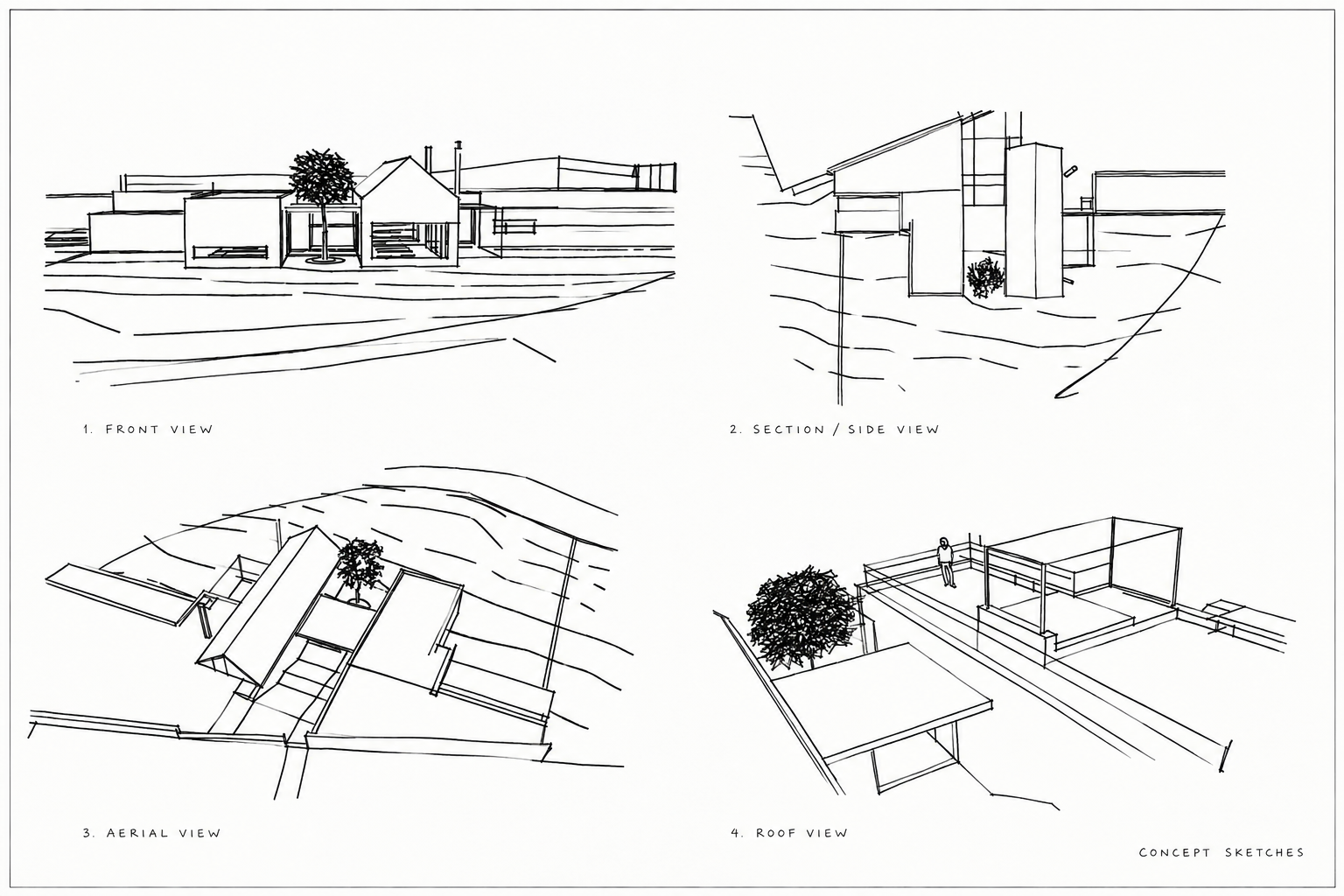
House 01 — Immersed in the Landscape
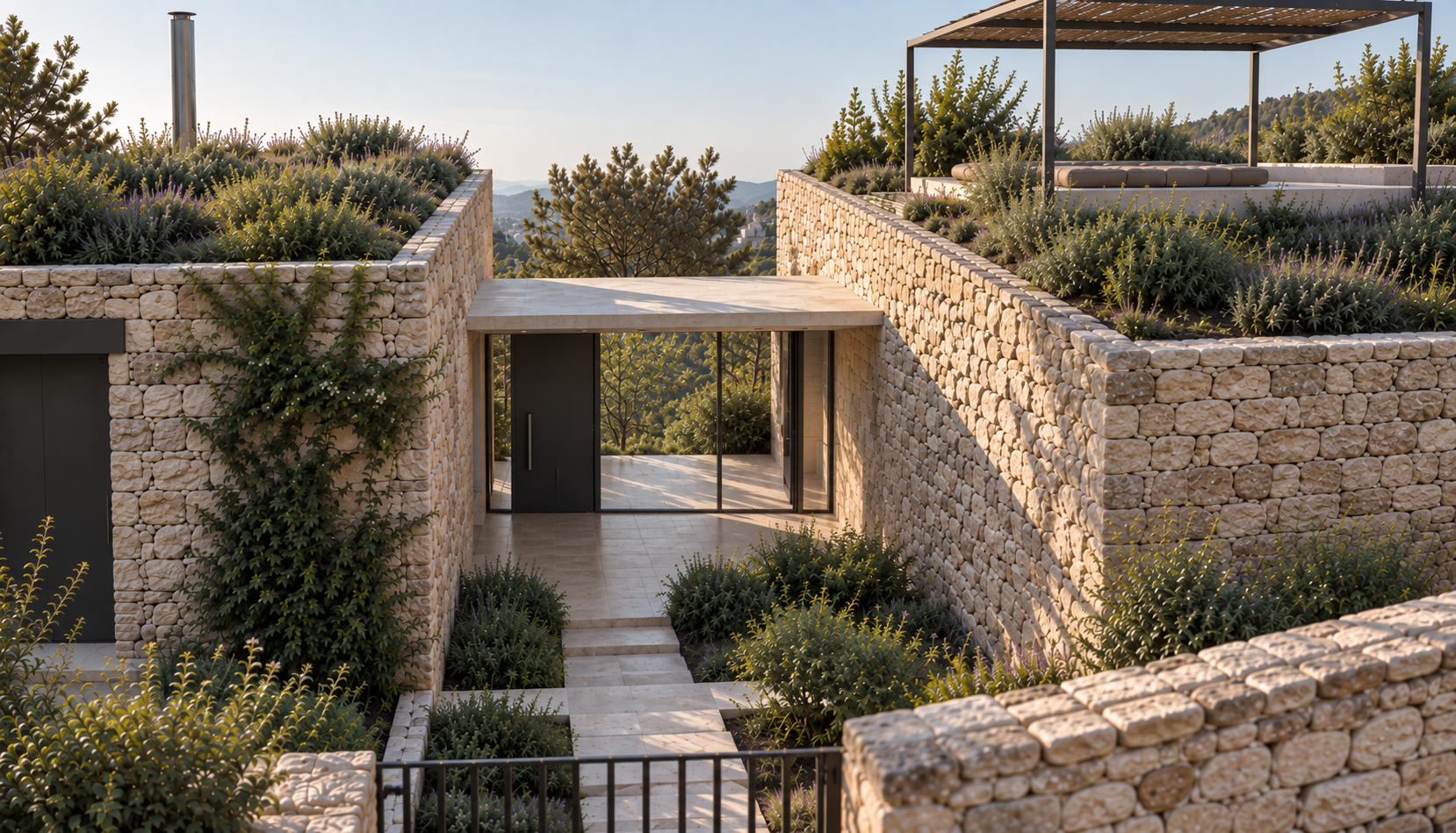
The first house is conceived as a true immersion in nature. Set entirely below the existing street level, it is approached by descending into the landscape, gradually revealing the entrance and the inner world of the house.
Its planted roof allows the building to almost disappear into its surroundings, creating a powerful example of sustainable, eco-friendly architecture integrated into the terrain. The roof becomes an extension of the landscape while also contributing to the thermal protection of the building.
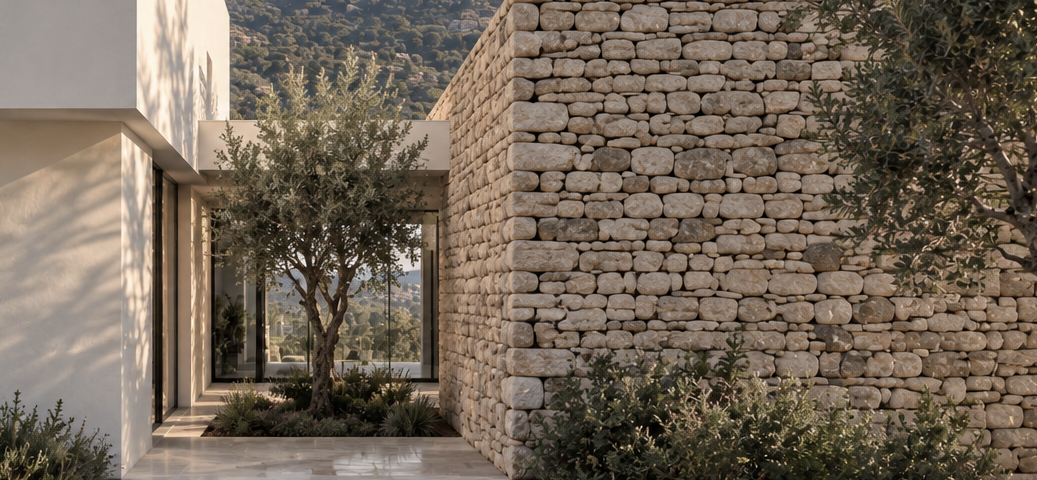
At the centre, an inner patio brings nature directly into the house, creating a living environment organized around vegetation and an olive tree.
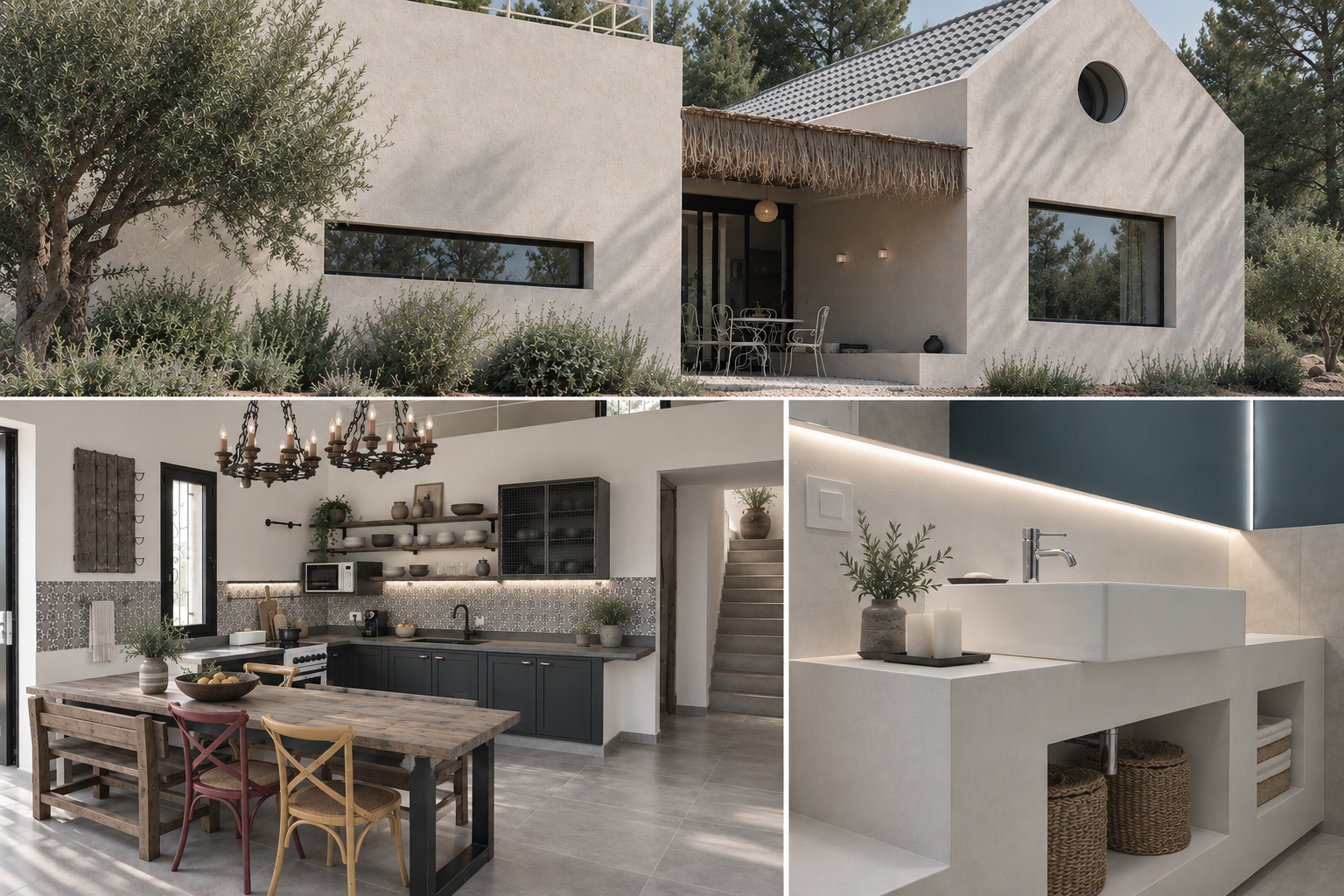
House 02 — Architecture and Materiality
The second house follows the same fundamental principles but responds to a more level terrain. The architecture remains closely integrated with its surroundings, while the presence of regional stone becomes more pronounced.
The materiality anchors the house to its landscape and local identity, with stone sourced from the region and worked by regional craftsmen. The planted roof, where appropriate, continues the strategy of merging architecture and landscape rather than treating the roof as a separate architectural surface.
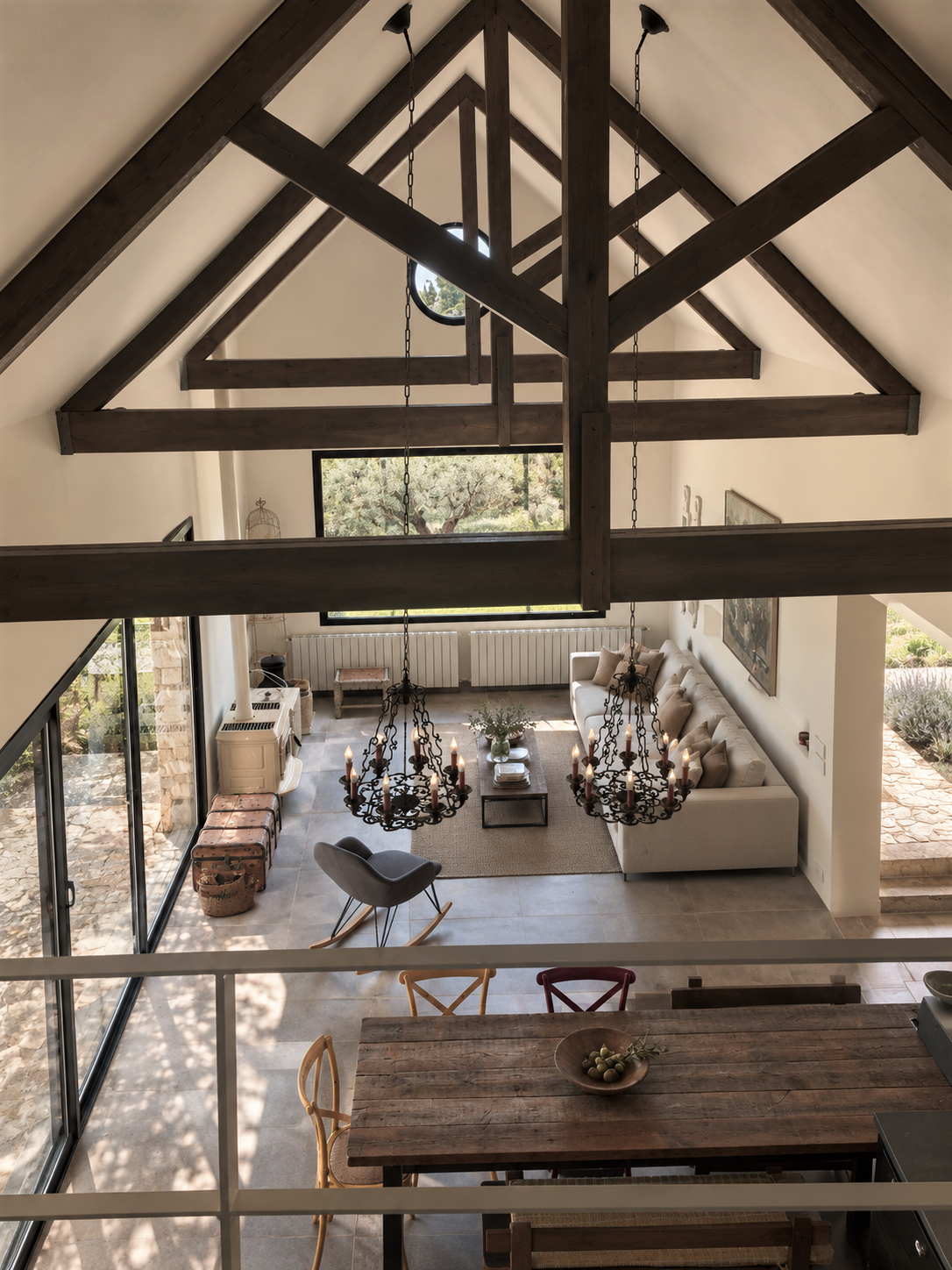
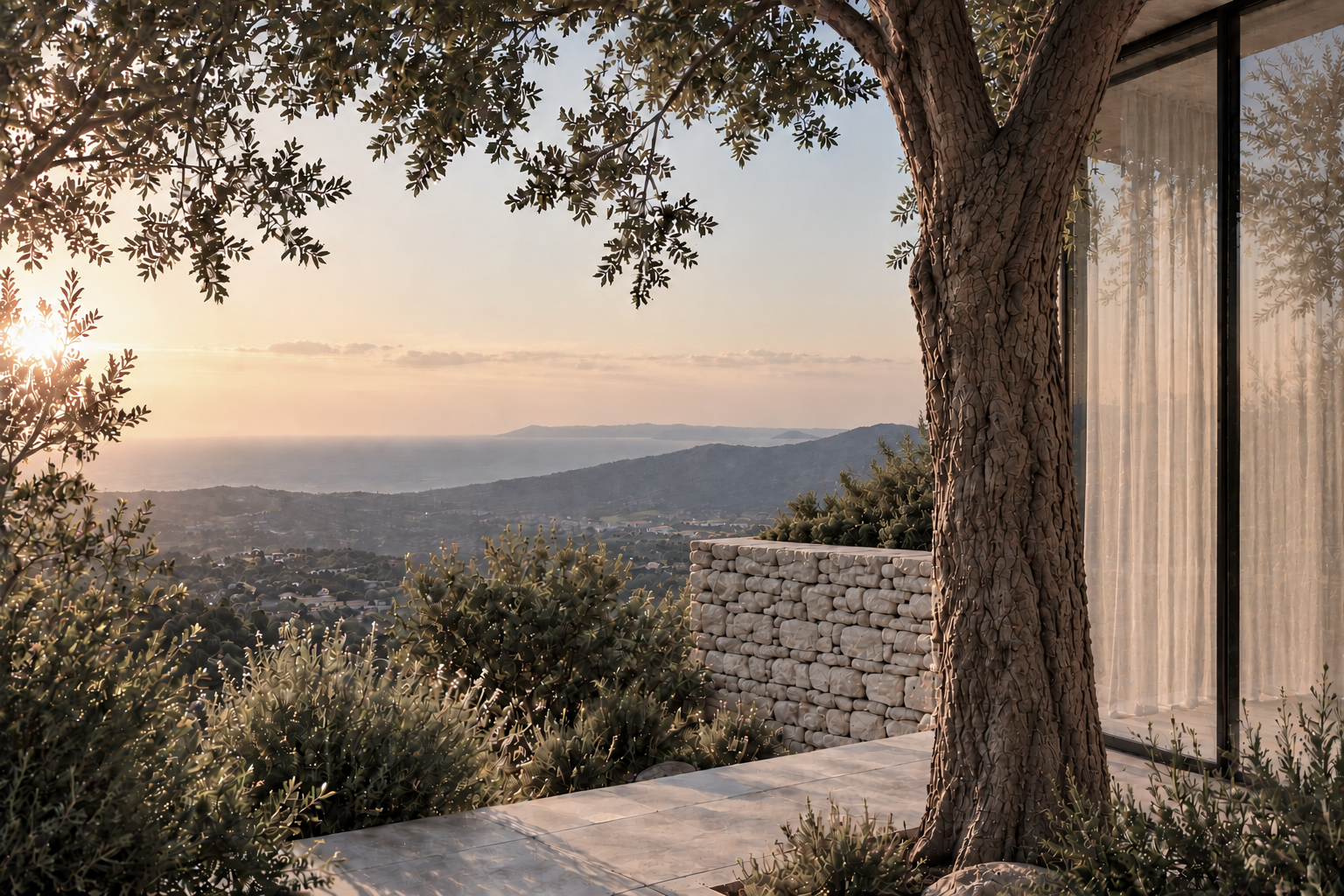
House 03 — Adapting the Concept
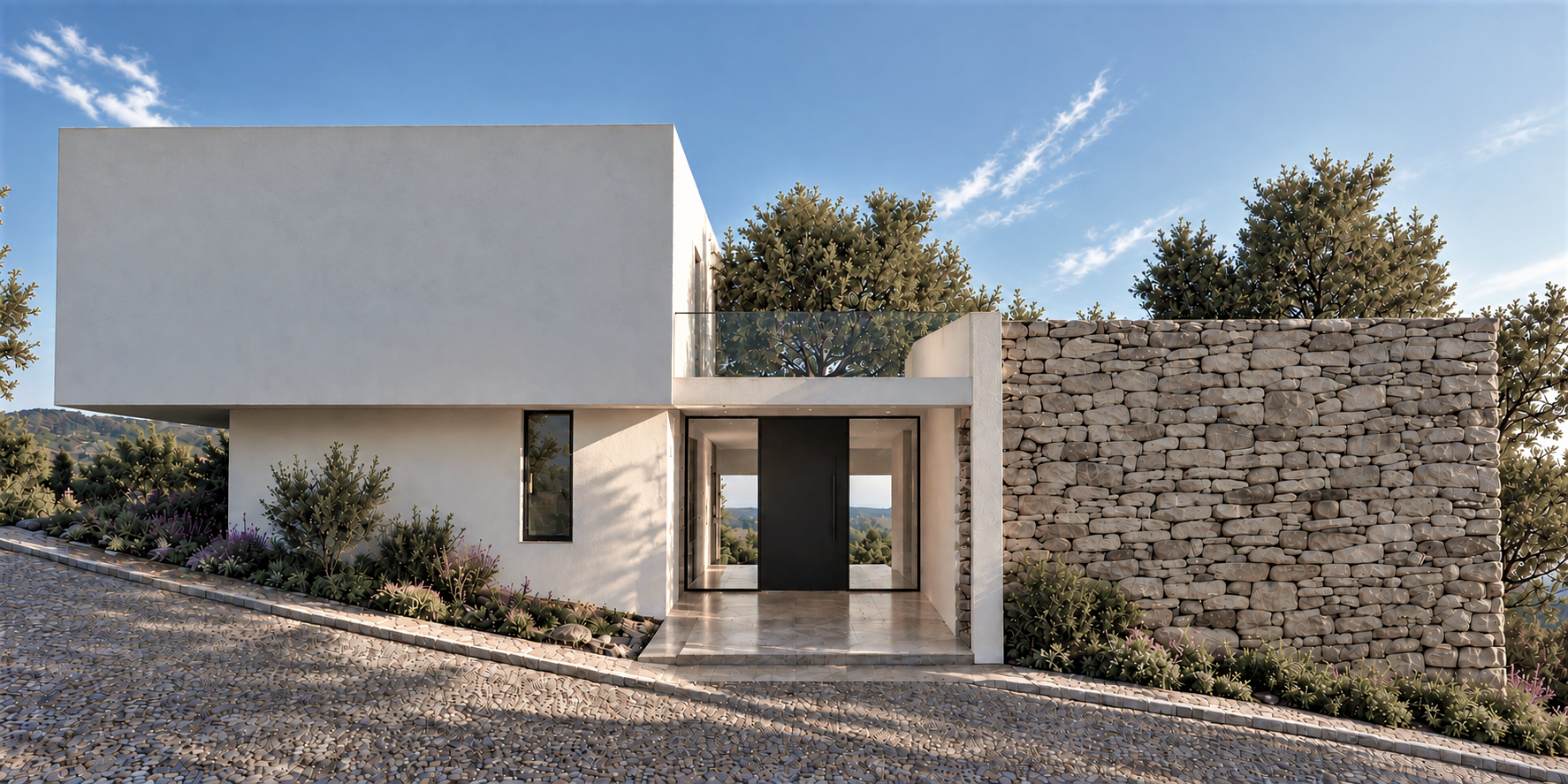
The third house develops the same architectural language while responding to a specific client requirement: the addition of an upper floor.
Despite this greater vertical presence, the project maintains the essential principles shared by the three houses—the separation of day and night volumes, the central glazed link, the inner patio and the continuous relationship between architecture and nature.